Powered By Blogger

Tuesday, September 6, 2011

Did You Know That Something In Your Kitchen Cabinets Has Health Benefits

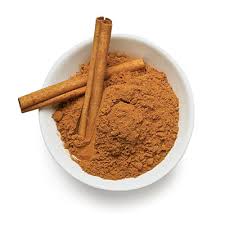
Did you know that there is something in your kitchen cabinets that has extreme health benefits that you probably are not aware of?  It is hidden in your spice cabinet to be exact.  It is a spice that everyone enjoys and it is used to season oatmeal, cookies, french toast, and other delicious foods.  The mystery  spice is something so common that you can buy it at any grocery store or super market.  You will be suprised at how much health benefits that can be achieved by consuming this simple spice.   Check out the health benefits of Cinnamon.   Information obtained from MSN - Fitbie By Jonny Bowden, Ph.D menshealth 

Cinnamon

This old-world spice usually reaches most men's stomachs only when it's mixed with sugar and stuck to a roll.

Why it's healthy: Cinnamon helps control your blood sugar, which influences your risk of heart disease. In fact, USDA researchers found that people with type-2 diabetes who consumed 1 g of cinnamon a day for 6 weeks (about 1/4 teaspoon each day) significantly reduced not only their blood sugar but also their triglycerides and LDL (bad) cholesterol. Credit the spice's active ingredients, methylhydroxychalcone polymers, which increase your cells' ability to metabolize sugar by up to 20 times.

How to eat it: You don't need the fancy oils and extracts sold at vitamin stores; just sprinkle the stuff that's in your spice rack (or in the shaker at Starbucks) into your coffee or on your oatmeal.

 

Friday, September 2, 2011

Add "Color" To Your Plate To Lose Weight


It's time to mix it up.  It's time to shake things up a bit.  It is time to add color to every meal.  I have found on my journey to a new me that you need to eat red, yellow, orange, green, or purple food. It is time to pack your meals with fruits and vegetables. They're low-calorie and loaded with vitamins and minerals your body needs to function, keep your immune system up, and maintain strong bones and muscles. Fruits and vegetables are also rich in fiber, which is key for slimming down. Tufts University researchers have found that people who eat high-fiber diets are less hungry and lose more weight than people who eat less fiber. "It takes longer to process fiber,"  "so you're full longer."

Many people have good intentions and buy a bunch of fresh produce, but then they forget to use it, and find it later rotting in the bottom of their fridge.  While fresh is great, it's not the only way to work in fruits and vegetables. Don't forget our super markets offer frozen, canned, dried, jarred as well as fresh produce.  All of these are great choices.  It is recommended that you should fill at least one-third of your plate with vegetables. Use these ideas to color every meal, and you'll be on the path toward good health and weight loss.

Breakfast
Add a sliced banana or a half cup of sliced strawberries  to cereal.
Add frozen, defrosted berries to yogurt.
Have a glass of tomato juice.
Add jarred salsa to scrambled eggs.
Top a waffle with canned peaches in water or light syrup.

Lunch
Put extra vegetables like cucumber or shredded carrots on sandwiches.
Use hummus or refried beans as a spread, instead of mayo or mustard.
Have raw vegetables in place of chips or pretzels.
Blend frozen fruit with seltzer for a peppy drink.

Dinner
Grill vegetable kebabs as well as lean meat.
Add dried apricots or golden raisins to rice pilaf.
Roast vegetables on the weekend and add to salads all week.
Add frozen vegetables or canned white beans to spaghetti sauce

One tip that my husband is good about sharing is that he cooks enough chicken breast for at least three meals at one time.  The first evening we might enjoy grilled chicken, baked potatoes, and salad.  The second night he slices all of the left over chicken and adds fajita seasoning and we have chicken fajitas.  The third night he cubes the remainging chicken that was seasoned with fajita seasoning and adds his homemade BBQ sauce and reheats the meat.  We have then dined on chicken prepared three ways and it really cuts the amount of time that is spent cooking in the kitchen!

Try it you may find that it works well for you and your family.  I will post most of our cooking to be healthy strategies in a later post.  Until then, remember to add more "color" to your plate and you to will lose weight!

Thursday, September 1, 2011

How Many Servings Are You Really Eating?


How many of us like to eat cereal for breakfast?  This is one of the easiest ways to get fuel in your body to start your day.  Cereals come in all types and varieties.  Every cereal box has the all important nutritional guide label posted on the outside of the box to give us the complete story behind what you are eating.

Well I would like to say that it is not always what type of cereal that you should be worried about (sugar variety vs. shredded wheat with no sugar) but the amount of cereal that you consume at one meal.  Let's do a little exercise to see just how much cereal you really are getting per serving.  Please follow these steps completely and do not read ahead.


1.  Get out a cereal bowl.  Your favorite cereal bowl.  The one that you always eat your cereal from and fill it as you normally would with your favorite brand.

2.  Now read the label on that box of cereal to find out the serving size and the calories per serving.

3.  Look at what's in your bowl. Is it more than a serving? Less? Chances are it's more than you think.

4.  Now the fun part begins.  Pour the cereal from your favorite cereal bowl into a measuring cup to find out.  (Please note the "actual serving size" as noted on your cereal box.  Some cereal servings are 3/4 of a cup  and not a one cup serving)

5.  What you will find is that "We measure with our eyes."  And our eyes are terrible judges of portions size.  

 
Case in point: A study in the American Journal of Preventive Medicine found people serve themselves up to 53% more ice cream when simply given a larger scooper and bowl. And since research shows people eat about 92% of whatever is in front of them, it pays to know what an appropriate serving should look like. The only way to know that is to measure what your eating.


Make It Work
While it may seem like a hassle at first, measuring out food can quickly become part of your daily routine. And after a few weeks of practice, you'll begin to train your eyes and brain to recognize what a serving should look like without having to actually measure. But first, you
need the right tools to get started.

Keep equipment handy. Leave a set of measuring cups and spoons on your kitchen counter so you remember to use them. 
  
Think convenience. Put a collapsible measuring cup in your favorite breakfast cereal so it's easy to measure during your morning rush.

Snack smart. Read the label on snack foods, and divide cookies, crackers, pretzels, and chips into individual servings. Store each in an airtight bag or container.

Make your mark. Read the label on block cheese to find out how many servings are in the package, then score the cheese appropriately.  I always do this with my small tub of fat free cream cheese and it feels like a huge serving when spread onto my bagel thin.

These are just a few ideas that I have found have helped me on my journey to a new me.  Try a few of them and see if it can help you lose a few pounds too!

Obesity To Worsen, Weigh Heavily On Healthcare Costs


This article is so true!  I have written several blog post regarding obestiy in America and this just verifies everything that I have been expressing.  This article was posted on Yahoo Health on Friday 8/26/2011.  Please read this and share it with your family and friends.  Obesity is quickly becoming the #1 killer in America and we need to work hard to put a stop to it in our families.


Obesity to worsen, weigh heavily on healthcare costs

Obesity is most widespread in Britain and the United States among the world's leading economies and if present trends continue, about half of both men and women in the United States will be obese by 2030, health experts warned on Friday.

Obesity is fast replacing tobacco as the single most important preventable cause of chronic non-communicable diseases, and will add an extra 7.8 million cases of diabetes, 6.8 million cases of heart disease and stroke, and 539,000 cases of cancer in the United States by 2030.

Some 32 percent of men and 35 percent of women are now obese in the United States, according to a research team led by Claire Wang at the Mailman School of Public Health in Columbia University in New York. They published their findings in a special series of four papers on obesity in The Lancet.
In Britain, obesity rates will balloon to between 41-48 percent for men and 35-43 percent for women by 2030 from what is now 26 percent for both sexes, they warned.

"An extra 668,000 cases of diabetes, 461,000 of heart disease and 130,000 cancer cases would result," they wrote.  Due to overeating and insufficient exercise, obesity is now a growing problem everywhere and experts are warning about its ripple effects on health and healthcare spending.
Obesity raises the risk of heart disease, stroke, diabetes, various cancers, hypertension, high cholesterol, among others.  Because of obesity, the United States can expect to spend an extra 2.6 percent on its overall healthcare bill, or $66 billion per year, while Britain's bill will grow by 2 percent, or 2 billion per year, Wang and colleagues warned.

OBESITY BOMB TICKING EVERYWHERE ELSE TOO
In Japan and China, 1 in 20 women is obese, compared with 1 in 10 in the Netherlands, 1 in 4 in Australia and 7 in 10 in Tonga, according to another paper led by Boyd Swinburn and Gary Sacks of the WHO Collaborating Center for Obesity Prevention at Deakin University in Melbourne, Australia.
Worldwide, around 1.5 billion adults are overweight and a further 0.5 billion are obese, with 170 million children classified as overweight or obese. Obesity takes up between 2 to 6 percent of healthcare costs in many countries.

"Increased supply of cheap, tasty, energy-dense food, improved food distribution and marketing, and the strong economic forces driving consumption and growth are the key drivers of the obesity epidemic," Swinburn and Sacks wrote.

The health experts urged governments to lead the fight in reversing the obesity epidemic.
"These include taxes on unhealthy food and drink (such as sugar sweetened beverages) and restrictions on food and beverage TV advertising to children," wrote a team led by Steven Gortmaker at the Harvard School of Public Health, which published the fourth paper in the series.

Six Ways To Beat Mindless Munching

Today while reading the Health section of the Yahoo website I ran across an article from July from Women's Health.  It had some very interesting tips on how to beat mindless munching.  Before I started my journey to a new me I was the World's Biggest Mindless Muncher.  Check out this article and see if you can get your mind in gear and stop all the mindless munching that you are doing.

6 Ways to Beat Mindless Munching


You know the usual suspects: your co-worker’s candy dish, that bowl of salty-nutty whatever-it-is deliciousness they put out during happy hour—or the bag of crunchy puffs whose label reads “natural.” Who hasn’t blindly nibbled their way through what seemed like a simple snack and realized they’d just consumed hundreds of extra calories? Good news: there’s hope for the mindless munchers among us. Here’s how to quell your non-stop noshing once and for all.

Banish hunger
"Skipping meals sets you up for intense cravings," says Susan Kraus, R.D., a nutritionist at Hackensack University Medical Center. Eating regular meals of complex carbs—not refined ones like white bread and pasta—with protein and a small amount of healthy fat will keep your blood sugar steady, and you feeling satisfied. When you do snack between meals, make smart choices. Foods with staying power: low-fat yogurt and granola or half a whole-wheat English muffin spread with natural peanut butter.


Identify triggers
Keep a food log for a week, recording your moods, what stresses you out, and how hungry you feel before eating. Once you've identified the things that drive you to raid your candy stash, you can react productively instead of eating half a pound of chocolate.

Wait it out
You're most susceptible to your brain's demands during the 20 minutes after a stressful episode—the amount of time it takes for serotonin to bounce back and stress hormones to fall. If you can resist a temptation for just that long, the urge will probably fade.


Drink something
The hypothalamus, your brain's control center for mood- and food-related signals, detects thirst as well as hunger. Gulp a glass of water or hot tea (make it decaf—caffeine can trigger the release of stress chemicals) and see if the craving passes.

Blow it off
If you absolutely need an oral fix, reach for sugar-free gum. Researchers in Australia measured the levels of cortisol in the saliva of study subjects and found that on average, gum chewers had 16 percent less of the stress hormone than non-chewers and responded better to stressful situations.


See the lighter side
Studies show that laughter cuts stress, releases feel-good endorphins, and burns calories—an hour of yukking it up can torch about as many as a half-hour of lifting weights.

What The CDC Has To Say About Being Overweight & Obesity

 Like I have shared before in my blog, I love to read and do research on being overweight and obesity.  My interest has been due to the fact that all of my adult life I have been in this shape myself.  During my journey to a new me I am learning more and more about myself and why I am the way that I am.  My thinking towards food, activity and my overall health have completely changed since starting on my journey to a new me on December 11, 2010.  Here is some thoughtful information that I found on the CDC website regarding being overweight and obesity.

Overweight and Obesity

Causes and Consequences

Is there a quick answer to the question, "what contributes to overweight and obesity?"
Overall there are a variety of factors that play a role in obesity. This makes it a complex health issue to address. This section will address how behavior, environment, and genetic factors may have an effect in causing people to be overweight and obese.
When it comes to maintaining a healthy weight for a lifetime, the bottom line is – calories count! Weight management is all about balance – balancing the number of calories you consume with the number of calories your body uses or "burns off."
  • A calorie is defined as a unit of energy supplied by food. A calorie is a calorie regardless of its source. Whether you're eating carbohydrates, fats, sugars, or proteins, all of them contain calories.
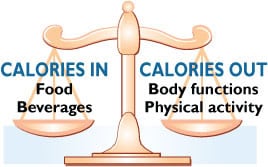
  • Caloric balance is like a scale. To remain in balance and maintain your body weight, the calories consumed (from foods) must be balanced by the calories used (in normal body functions, daily activities, and exercise).
Caloric balance is like a scale. Calories in = food and beverages. Calories out = body functions and physical activity.
If you are…Your caloric balance status is ….
Maintaining your weight"in balance." You are eating roughly the same number of calories that your body is using. Your weight will remain stable.
Gaining weight"in caloric excess." You are eating more calories than your body is using. You will store these extra calories as fat and you'll gain weight.
Losing weight"in caloric deficit." You are eating fewer calories than you are using. Your body is pulling from its fat storage cells for energy, so your weight is decreasing.
Genetics and the environment may increase the risk of personal weight gain. However, the choices a person makes in eating and physical activity also contributes to overweight and obesity.
For more, see Healthy Weight – Balancing Calories.

Environment

People may make decisions based on their environment or community. For example, a person may choose not to walk to the store or to work because of a lack of sidewalks. Communities, homes, and workplaces can all influence people's health decisions. Because of this influence, it is important to create environments in these locations that make it easier to engage in physical activity and to eat a healthy diet. The Surgeon General's Call to Action to Prevent and Decrease Overweight and Obesity 2001 identified action steps for several locations that may help prevent and decrease obesity and overweight. The following table provides some examples of these steps.
LocationSteps to Help Prevent and Decrease Overweight and Obesity
Home
  • Reduce time spent watching television and in other sedentary behaviors
  • Build physical activity into regular routines
Schools
  • Ensure that the school breakfast and lunch programs meet nutrition standards
  • Provide food options that are low in fat, calories, and added sugars
  • Provide all children, from prekindergarten through grade 12, with quality daily physical education
Work
  • Create more opportunities for physical activity at work sites
Community
  • Promote healthier choices including at least 5 servings of fruits and vegetables a day, and reasonable portion sizes
    Encourage the food industry to provide reasonable food and beverage portion sizes
    Encourage food outlets to increase the availability of low-calorie, nutritious food items
    Create opportunities for physical activity in communities

Genetics

How do genes affect obesity?
Science shows that genetics plays a role in obesity. Genes can directly cause obesity in disorders such as Bardet-Biedl syndrome and Prader-Willi syndrome.

However genes do not always predict future health. Genes and behavior may both be needed for a person to be overweight. In some cases multiple genes may increase one's susceptibility for obesity and require outside factors; such as abundant food supply or little physical activity.

For more information on the genetics and obesity visit Obesity and Genetics: A Public Health Perspective.

Other Factors

Diseases and Drugs
Some illnesses may lead to obesity or weight gain. These may include Cushing's disease, and polycystic ovary syndrome. Drugs such as steroids and some antidepressants may also cause weight gain.

A doctor is the best source to tell you whether illnesses, medications, or psychological factors are contributing to weight gain or making weight loss hard.

http://www.cdc.gov/obesity/causes/index.html

I do not believe anyone knows all the answers when it comes to being overweight or obese, but the CDC has done tremendous research to try to give a good over view of what could be some of the most common reasons.  With this information so readily available to most of America via the web, I wonder why more people are not doing something about it?   Aren't you?

Making Meal Plans For A Holiday Weekend

I don't know about you but I love family get togethers and time spent with my family! This weekend marks the last of the summer holiday weekends with Labor Day on Monday. I have always wondered why this holiday was called "Labor Day" when we don't labor at all but enjoy a day off from our labor. Oh well who knows? But I am happy to have the day off from work!

This weekend we have plans to enjoy time with my family at the lake and with the planning comes the thoughts of food and meals. Just because I am watching what I am eating does not mean that everyone else who will be there will be to, so there has to be thoughts about what we will eat. I spoke to my parents and we have come up with a meal plan that should be satisfying for everyone.

So here is the question, how can we have meals that are nutritional, delicious and still please everyone? Well it is not always easy on my journey to a new me to find the perfect mixture of  foods that are both healthy and taste good. Who wants to have a mini vacation and feel like they are eating lettuce three meals a day? Not Me!

Saturday evening we will crank up the grill and smoker and cook up some BBQ chicken and pork. A few vegetables, baked potato and cut up melon should be yummy and put a smile on everyone's face. Sunday my dad will make his "almost world famous pot roast " with potatoes and carrots cooked in with the meat. For sides we will have homemade mashed potatoes, gravy (but not for me)  vegetables and a toss salad. Monday we will have another cook-out on the grill for tasty hamburgers and hot dogs, baked beans, coleslaw and a variety of fruit.

With all this talk of food it is making me hungry! Now you may be wondering how I will eat any of the items above and still continue on my journey to a new me? Very easily, I will eat the foods that I love, and remember to count my calories for all the food that I do consume.  It is easy to do with my iphone and my app for http://www.myfitnesspal.com/  With this app I am able to journal everything that I put into my mouth.  My goal of 85 pounds is just around the corner, and I hope that when my Labor Day mini-vacation is over that Mr. Scale will have some very nice to report to me about my efforts.  I will keep you posted as the weekend approaches but until then start thinking about your Labor Day weekend now?  How will you spend it?  What will you do for activity?  And most importantly what kind of food choices will you be making?  You have a few more days to think about your meals, so don't be caught without a plan. 
Happy Labor Day everyone!

My grandson, CJ, and my grandaughter, Leah,
love to spend time at the lake & in the water.